

To determine whether you have a parasite infecting your digestive tract
Ova and Parasite Exam
Ova and Parasite Exam
Also Known As
O&P
Formal Name
Parasitic Examination, stool
This article was last reviewed
on
This article waslast modified
on April 20, 2018.
At a Glance
Why Get Tested?
When To Get Tested?
When you have diarrhea that lasts more than a few days and/or have blood or mucus in your loose stools, especially if you have drunk unpurified water while camping or have traveled outside of the United States
Sample Required?
A fresh stool sample transported to the lab within 2 hours or a preserved stool sample; sometimes multiple samples collected on different days
Test Preparation Needed?
None
Accordion Title
Common Questions
-
How is it used?
The ova and parasite (O&P) exam is used to detect the presence of parasites in a stool sample and help diagnose an infection of the digestive system (gastrointestinal, GI tract). Since there are many causes of GI infections, an O&P may be used in conjunction with other tests, such as a gastrointestinal (GI) pathogens panel or a stool culture, to help establish a diagnosis.
A GI pathogens panel is performed on a stool sample to simultaneously test for the viruses, bacteria, and parasites that are common causes of GI infections. These panels are relatively new and laboratories and healthcare practitioners are still determining how to utilize them to provide the optimum patient results while being cost-effective. An O&P and a stool culture may also be done if a microbe is not identified by the panel and/or if there is suspicion of a parasite or bacteria other than those included in the GI panel.
Many GI infections in the U.S. resolve with no specific treatment, with only supportive care, and may not require testing. In otherwise healthy individuals, the infections are considered common illnesses that are not serious and sometimes thought of as "food poisoning" or "stomach flu." However, there are cases where it is useful to perform testing that identifies the cause of the GI infection – to guide its treatment, eliminate its source, and limit its spread.
O&P tests may also be ordered to monitor the effectiveness of treatment for a parasitic infection.
Other tests for parasites may be used in conjunction with an O&P to help make a diagnosis. A healthcare practitioner may order a Giardia, Cryptosporidium, or Entamoeba histolytica antigen test if it is suspected that one of these parasites may be causing a patient's infection. These tests detect protein structures on the parasites and can identify an infection, even if no actual parasites or ova are seen in the stool. Since antigen tests only detect a few specific parasites, they are not replacements for the complete O&P, which will detect a wider variety of parasites.
-
When is it ordered?
The O&P is ordered when a person is suspected of having ingested contaminated food or water and has signs and symptoms of a GI infection, such as:
- Prolonged diarrhea
- Abdominal pain, cramping
- Nausea, vomiting
- Blood and mucus in the stool
Not everyone who has these symptoms will necessarily have testing done or be treated. In people who have healthy immune systems, these infections often resolve with supportive care and without treatment. An O&P is more likely to be ordered when a person:
- Has severe symptoms, dehydration, electrolyte imbalance, and/or other complications
- Is very young, elderly, or has a weakened immune system
- Has prolonged signs and symptoms and/or infections that do not resolve without treatment
- Has an illness during and following travel outside the U.S., especially to emerging nations; the Centers for Disease Control and Prevention (CDC) estimates that 30% to 70% of those who travel outside of the U.S. will get a GI infection.
- Has recently consumed stream or lake water
- Has been exposed to someone who has a parasitic infection (like a family member)
O&P tests may also be ordered when someone has been diagnosed with a parasitic infection to monitor the effectiveness of treatment.
-
What does the test result mean?
If there are no ova or parasites seen, then a person's diarrhea may be due to another cause. There may also be too few parasites to detect in the sample tested. A healthcare practitioner may order additional O&P tests to confirm this finding and/or may order other tests to search for the cause of the persistent symptoms.
If a parasite is identified, then the person does have a parasitic infection. Ova and parasites present in the stool samples are identified and counted. Numbers may range from many to very few or rare.
Typically a person will only have one type of parasite that is causing their symptoms, but there could be more than one. The most common and frequently detected parasites in the U.S. are:
- Giardia species—some of the most common intestinal parasites in the United States
- Cryptosporidium (often called crypto)—one of the leading causes of recreational water-related disease outbreaks in the U.S.
- Entamoeba histolytica—common but only causes illness in about 10% to 20% of those infected
Some examples of other intestinal parasites that may be detected with an O&P include the following.
Single cell parasites:
- Dientamoeba fragilis
- Balantidium coli
- Cyclospora cayetanensis
Worms (helminths):
- Roundworms such as Ascaris, Strongyloides
- Hookworms
- Tapeworms such as Hymenolepis nana, Taenia solium and Diphyllobthrium latum
- Flatworms and flukes such as Fasciolopsis buski
The type and duration of treatment will depend on what kinds of parasite(s) are found and on the person's general state of health. The number of parasites seen may give a healthcare practitioner general information about how extensive the infection is.
For more on parasites that cause GI infections, see the articles on Diarrhea, Food and Waterborne Illness, and Travelers' Diseases.
-
Is there anything else I should know?
Drug therapies are usually used to treat Giardia, E. histolytica and Cryptosporidium infections. They may resolve themselves after several weeks, but they may also cycle, with symptoms subsiding and then worsening again. In those with healthy immune systems, crypto generally goes away after a few weeks. In those with weakened immune systems (such as those with AIDS, organ transplant, cancer, etc.), however, crypto may be dangerous, becoming chronic and causing wasting and malnutrition.
-
How can I prevent a parasitic infection?
The best way is to avoid food and water that are potentially contaminated. This is especially true if you travel to emerging nations, where ice in a drink or a dinner salad may expose you to parasites. But the clearest mountain stream should also be suspect; it could be contaminated with Giardia. You cannot see most parasites; you won't be able to smell them or taste them in the water. If someone in your family has a parasitic infection, careful hand washing after going to the bathroom or handling soiled diapers can help prevent passing the parasite on to others. The infected person should avoid preparing food for others until that person's symptoms are gone.
-
Will an O&P detect all parasites?
No, only those that live in the digestive tract and whose eggs are passed through the stool; there are other tests specific for other parasites, such as pinworms, or blood parasites that cause malaria.
-
Why does it need to be a fresh stool sample?
The structure of the parasites may deteriorate in unpreserved stool, which would destroy the identifying characteristics of the parasite and make the infection harder to detect.
-
Are those parasitic worms I'm seeing in my stool sample?
Most of the common parasites are much too small to be seen with the naked eye. What you are probably noticing are undigested food fibers. The only way to be sure though is to look at the sample under the microscope. Parasites have characteristic external and internal structures that fibers do not have.
-
Are there other ways to test for intestinal parasites besides a stool exam?
Yes, blood antibody tests may be ordered to determine whether or not someone has been exposed to a parasite in the past. A positive result may indicate a past or a chronic infection but is not used to detect a current infection. Sometimes a biopsy of the small intestines is taken and the small amount of tissue is examined for parasitic infestation.
-
Once I've had a parasitic infection, can I be re-infected?
Yes, you can become re-infected if exposed again. This may happen if you have a family member who has an asymptomatic parasitic infection, such as giardiasis, and continues to shed the organisms and re-infects others. The infection can be transmitted until everyone is effectively treated.
-
Why shouldn't I take an over the counter anti-diarrhea medicine?
You should only take this on the advice of your healthcare provider. Diarrhea is one of the methods your body uses to help rid itself of the infection. If you slow down or prevent this from happening by taking anti-diarrhea medication, you can prolong the amount of time that you are ill and may make your infection worse.
Related Images and Infographic

View More

Giardia lamblia as seen under a microscope. Image credit: CDC

View More
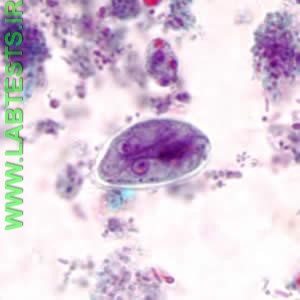
Giardia as seen under a microscope. Image credit: CDC

View More

Lifecycle of Giardia. Image credit: CDC

View More

Entamoeba histolytica cyst. Image credit: CDC

View More

Cryptosporidium (arrows). Image credit: CDC


