

To help diagnose or rule out a rare adrenal tumor called a pheochromocytoma or a rare extra-adrenal tumor called a paraganglioma; these tumors produce excess hormones called catecholamines, which are broken down to metanephrines.
Plasma Free Metanephrines
Plasma Free Metanephrines
Also Known As
Plasma Metanephrines
Formal Name
Fractionated Plasma Free Metanephrines (Metanephrine and Normetanephrine)
This article was last reviewed
on
This article waslast modified
on November 14, 2017.
At a Glance
Why Get Tested?
When To Get Tested?
When you have symptoms of increased catecholamines release such as sudden bursts (paroxysms) of high blood pressure (hypertension), severe headaches, rapid heart rate (palpitations), sweating, and tremors; when hypertension does not respond to standard treatment; when the signs and symptoms occur in a relatively young person (younger than age 40) and when there is a family history of hypertension; when a health practitioner suspects you may have a tumor that is releasing or may release excess catecholamines
Sample Required?
A blood sample drawn from a vein in your arm
Test Preparation Needed?
Blood for plasma metanephrine testing is collected by inserting a needle into a vein in your arm. Although you may be seated for the collection, it is recommended that you be lying down. The healthcare provider or the collection site will instruct you as to their specific requirements.
These tests are affected by certain drugs, foods, and stresses. Inform your healthcare provider of any medications you are taking and follow any preparation instructions you are given before sample collection.
Accordion Title
Common Questions
-
How is it used?
The plasma free metanephrines test is used to help diagnose or rule out the presence of a rare tumor called a pheochromocytoma or a paraganglioma that releases excess metanephrines. Testing also may be used when a tumor has been treated or removed to monitor for recurrence.
Metanephrine and normetanephrine are breakdown products (metabolites) of epinephrine (adrenaline) and norepinephrine. Epinephrine and norepinephrine are hormones called catecholamines that are released into the blood in response to physical or emotional stress and help regulate the flow and pressure of blood throughout the body. (For more on this, see the "What is being tested?" section.) Since pheochromocytomas and paragangliomas produce these hormones in excess, measuring the amount in the blood and/or urine may help detect the tumor.
The Endocrine Society recommends using a test for plasma free metanephrines or urine metanephrines to evaluate an individual for a pheochromocytomas or paragangliomas. The blood test may be most useful when the person has persistent hypertension or is currently experiencing a sudden burst (paroxysm) of hypertension. This is because the hormones do not stay long in the blood; they are used by the body and rapidly broken down (metabolized) and/or then eliminated. Urine testing measures the total amount of metanephrines released into the urine in 24 hours. Since the hormone levels may fluctuate significantly during this period, the urine test may detect excess production that is missed with the blood test.
The test for metanephrines is very sensitive and false positives do occur. The test is affected by stress, drugs, smoking and various foods such as caffeine-containing drinks and alcohol. If a person has only moderately elevated metanephrines, then the healthcare provider may re-evaluate the person's medications, diet, and stress level to look for interfering substances or conditions. Once these are resolved, the person may be tested again to determine whether the metanephrines are still elevated and take appropriate action. Sometimes the plasma free metanephrines test will done in conjunction with 24-hour urine metanephrines testing and/or followed by catecholamines testing to help decide if a catecholamine-secreting tumor is present.
-
When is it ordered?
The plasma free metanephrines test is primarily ordered when a health practitioner either suspects that someone has a catecholamine-secreting tumor or wants to rule out the possibility. It may be ordered when a person (especially a person younger than age 40) has sudden bursts (paroxysms) of signs and symptoms, such as:
- High blood pressure (hypertension), especially when a person has hypertension that is not responding to treatment since people with catecholamine-secreting tumors are frequently resistant to conventional therapies
- Severe headaches
- Sweating
- Flushing
- Rapid heart rate (palpitations)
- Tremor
Testing may also be ordered when a catecholamine-secreting tumor has been treated or removed to monitor for recurrence.
Occasionally, the test may be ordered when an adrenal tumor is detected incidentally, such as during a scan conducted for another purpose, or when someone has a strong personal or family history of catecholamine-secreting tumors. It may also be ordered for an asymptomatic person with a known genetic risk of these tumors.
-
What does the test result mean?
Normal metanephrine and normetanephrine blood levels mean it is unlikely that the person tested has a catecholamine-secreting tumor. The plasma free metanephrines test is very sensitive and these tumors are rare, so the negative predictive value of the test is very good.
High levels of metanephrine and normetanephrine in a person with signs and symptoms suggest the presence of a catecholamine-secreting tumor. It is recommended that patients with a positive result should receive appropriate follow-up according to the test values noted and the clinical presentation. Imaging scans, such as MRI, should be done to locate the tumor.
If levels are elevated in someone who has been treated for a catecholamine-secreting tumor, it may be an indication that the treatment was not fully effective or that the tumor is recurring and appropriate follow-up is needed.
-
Is there anything else I should know?
While the plasma free metanephrines test can help detect and diagnose the presence of a catecholamine-secreting tumor, it cannot tell the healthcare provider the location of the tumor or whether it is benign or malignant (although most are benign). Imaging studies may be used to locate the tumor and genetic testing may be used to determine potential malignancy.
Although pheochromocytomas and extra-adrenal paragangliomas are rare, 25% occur in the setting of a hereditary syndrome associated with alterations in specific genes. These genetic syndromes have thus been identified as carrying an increased tumor risk. Examples include MEN-1 and MEN-2 (Multiple Endocrine Neoplasia, types 1 and 2) syndromes. (For more information on these, see Genetics Home Reference: Multiple Endocrine Neoplasia.)
It has been proposed that all patients diagnosed with a pheochromocytoma or extra-adrenal paraganglioma should consider genetic counseling and testing. Early identification of a hereditary syndrome allows for early screening for other associated tumors. In addition, some people with a hereditary syndrome are more likely to develop malignant or recurrent disease. Knowledge of the specific genetic mutation permits increased vigilance during preoperative localization or postoperative surveillance of such patients.
It is also recommended that if a mutation is identified, predictive genetic testing should be offered to asymptomatic at-risk family members.
A variety of medications can interfere with catecholamines testing. However, it is important to talk to your healthcare provider before discontinuing any prescribed medications. The practitioner will work with you to identify potentially interfering substances and drug treatments and to determine which of them can be safely interrupted and which must be continued for your well-being.
Tests used for determining the presence of catecholamine-secreting tumors (pheochromocytomas and paragangliomas) include plasma catecholamines, urine catecholamines, plasma free metanephrines and urine metanephrines. These tests measure either the catecholamines or their metabolites (metanephrines) and have varying sensitivity and specificity. Current guidelines recommend plasma free metanephrines or urinary fractionated metanephrines for initial biochemical testing. The healthcare provider may, however, select any one (or more than one) depending on the person’s presentation, family history, and/or genetic profile.
-
Can I have more than one pheochromocytoma at once?
Yes. Usually a single adrenal tumor will arise in one gland or the other, but multiple tumors can form. This is more likely in people with a strong family history of pheochromocytomas. A person may have a tumor in each adrenal gland or occasionally in other locations.
-
Does the amount of plasma free metanephrines detected correspond to the size of the tumor?
No, it has more to do with the characteristics of the tumor. Even a very small tumor can produce large amounts of catecholamines.
-
Is it really necessary to follow the dietary restrictions?
The level of catecholamines (and their metabolites) in blood is affected by diet. For test accuracy, interfering substances need to be avoided. Various foods, including caffeine-containing foods such as coffee and energy drinks, and chocolate, as well as cigarette and cigar smoking may interfere with the test and should be avoided prior to testing. It is important to follow the instructions given by your healthcare provider and the specimen collecting site.
-
Is it really necessary to lie down before testing?
The patient may be seated for the blood sample collection. However, recent guidelines suggest that it is preferable for the patient to be lying down. The healthcare provider or the collection site will instruct the patient as to their specific requirements.
Related Images

View More
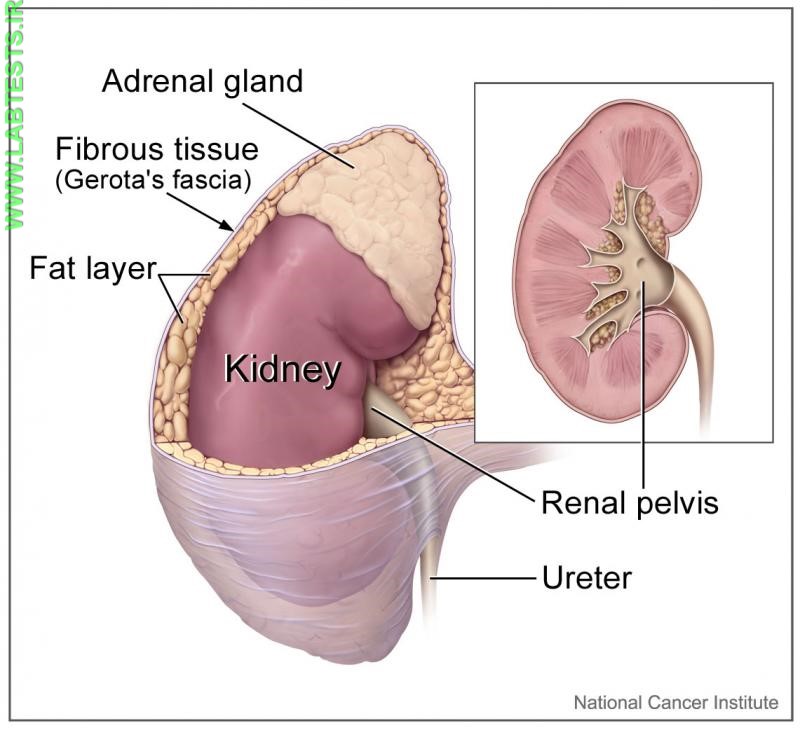
Location of the adrenal gland. Image credit: Alan Hoofring, National Cancer Institute


