

To screen for cervical cancer and certain vaginal or uterine infections
Pap Test
Pap Test
Also Known As
Pap Test
Cervical Smear
Cervical/Vaginal Cytology
Formal Name
Papanicolaou Test
This article was last reviewed
on
This article waslast modified
on July 23, 2018.
At a Glance
Why Get Tested?
When To Get Tested?
For women age 21 or older, once every 3 to 5 years depending on your age, risk factors, use of other screening tests, and your healthcare provider's advice
Sample Required?
Cells from the cervical area
Test Preparation Needed?
You may be instructed not to douche or tub bathe for 24 hours before the Pap test is to be performed. You may also be asked to refrain from sexual intercourse for 24 to 48 hours before the test. Do not use any vaginal creams or foams for 48 hours prior to the exam and do not schedule the test during your menstrual period.
Accordion Title
Common Questions
-
How is it used?
A Pap test is primarily used to screen for cervical cancer. It is used to look for cervical and/or vaginal cells that are cancerous or that may be precancerous. A sample of cervical cells or cell suspension is placed on a glass slide, stained with a special dye (Pap stain), and viewed under a microscope by a cytotechnologist and/or pathologist. The Pap test can also be used to detect vaginal or uterine infections, such as trichomonas infections.
Abnormal cells and infections can be present without causing any noticeable symptoms. In some cases, further testing and/or treatment may be required while in other cases, the healthcare provider may choose to monitor the person over time to see if the situation resolves on its own.
Almost all cases of cervical cancer are caused by persistent infections with certain strains of human papillomavirus (HPV), a very common sexually transmitted viral infection. An HPV test may be done along with a Pap test for women age 30 to 65 every 5 years. Abnormal results on a Pap test may also be followed by HPV testing.
Recent (2015) interim guidelines from a panel of experts representing several major health organizations say that HPV testing without a Pap test may be offered as a cervical cancer screening option for women age 25 and older.
-
When is it ordered?
The appropriate frequency of Pap testing is dependent on age, concurrent use of the HPV test, and risk factors (see Screening: Cervical Cancer (Young Adults), (Adults), (Adults 50 and Up)). The American College of Obstetricians and Gynecologists, the U.S. Preventive Services Task Force, and the American Cancer Society recommend the following:
- Screening with Pap tests should begin no earlier than age 21.
- Women between the ages of 21 and 30 should have a Pap test every 3 years.
- Women between the ages of 30 and 65 should have both a Pap test and an HPV test every 5 years (preferable); a Pap test alone every 3 years is also acceptable.
- After age 65, no screening is necessary if women have had adequate prior screening and no history of cervical cancer. This means that a woman who has had 3 consecutive negative Pap tests or 2 consecutive negative HPV DNA tests within the last 10 years, with the most recent within the last 5 years, no longer needs screening once she turns 65 years old.
The recent interim guidelines on using HPV testing without a Pap test suggest that women who choose this option and have a negative result on an initial HPV test not be screened again for 3 years.
Some women may need more frequent cervical cancer screening. Women with the following conditions and circumstances should discuss shorter screening intervals with their healthcare provider:
- HIV infection
- Suppressed immune system for other reasons, such as organ transplant
- Exposure to DES (diethylstilbestrol) during their mothers' pregnancy
- Previous treatment for cervical cancer or a condition called cervical intraepithelial neoplasia-2 or 3 (CIN 2, CIN 3)
A health practitioner may also order a Pap test when a woman has multiple sexual partners, is pregnant, or has abnormal vaginal bleeding, pain, sores, discharge, or itching.
-
What does the test result mean?

Various normal and abnormal cervical cells as seen under a microscope. A "negative" Pap test means the cells obtained appear normal or there is no identifiable infection. In some instances, the conventional Pap test may be reported as "unsatisfactory" for evaluation. This may mean that cell collection was inadequate or that cells could not be clearly identified. A summary of other reported results follows. [See below for Pap Test Terminology on the Bethesda System for classification of Pap test results.]
- Unsatisfactory: inadequate sampling or other interfering substance
- Benign: non-cancerous cells, but test shows infection, irritation, or normal cell repair
- Atypical cells of uncertain significance: abnormal changes in the cells that cover most of the external part of the cervix (squamous cells-ASCUS) or in the cells that cover the lining of the uterus opening and canal (glandular cells—AGCUS) for which the cause is undetermined; an ASCUS test result is frequently followed up with HPV testing to identify the presence of a high-risk infection with HPV.
- Low-Grade changes: frequently due to infection with HPV, which in some instances can be a risk for cervical cancer; this test result may be followed up with DNA testing to identify the presence of a high-risk HPV infection.
- High-Grade changes: very atypical cells that may result in cancer
- Squamous cell carcinoma or adenocarcinoma: terms used to identify certain types of cancer; in these cases, cancer is evident and requires immediate attention.
-
Is there anything else I should know?
The Pap test is generally used as a screening test. A certain percentage of abnormalities in women may go undetected with a single Pap test, which is why it is important to have Pap test done regularly. A significant limitation of the test has to do with sample collection. The Pap test represents a very small sample of cells present on the cervix and in the vaginal area. Even for the most experienced health practitioner, sample collection can be occasionally inadequate and a repeat Pap may be required.
If a woman douches, tub bathes, or uses vaginal creams 48 to 72 hours prior to the examination, the test results might be "unsatisfactory." Other factors that may alter results include menstrual bleeding, infection, drugs (such as digitalis and tetracycline), or having sexual relations within 24 hours prior to examination.
In these cases, a repeat Pap test may be necessary, but it does not necessarily mean there is a significant problem. In some instances, the use of the liquid-based techniques may eliminate obscuring materials such as blood and mucus that may prevent a clear and uncluttered presentation of cervical cells. A second advantage is that the same sample may be used to perform additional testing for HPV, if appropriate.
-
What are the risk factors for cervical cancer?
The most important risk factor for cervical cancer is infection with high-risk types of human papilloma virus (HPV). That is why HPV tests are now recommended in conjunction with a Pap test for women who are 30 to 65 years of age.
According to the National Cancer Institute, additional factors can further raise cervical cancer risk after an HPV infection. These include having many children, long-term oral contraceptive use, and chronic inflammation.
Increased risk is also associated with beginning sexual intercourse at an early age, having multiple sexual partners, infrequent Pap test, cigarette smoking, a history of DES exposure, previous diagnosis of cervical cancer, compromised immune system from organ transplant or HIV, and the presence of other sexually transmitted diseases such as herpes.
-
Do I need a Pap test if I have an HPV test done?
You may be able to have an HPV test without a Pap test. The Food and Drug Administration recently approved an HPV test for use without a Pap test and recent (2015) interim guidelines from a panel of experts representing several major health organizations say that HPV testing without a Pap test may be offered as a cervical cancer screening option for women age 25 and older. Though the panel reviewed the evidence from several research studies to make their recommendations, it acknowledges that more studies are needed to further evaluate the HPV test and its role in cancer screening. For example, there are still questions about whether age 25 is the best age to start offering it as a primary screening option and how often women should be screened. (For more, read the news item "Experts Offer Advice on hrHPV Testing as a Primary Screen for Cervical Cancer.")
-
Do I need cervical cancer testing even if I've had the HPV vaccine?
Because an HPV vaccine does not protect against all cervical cancers, women who have had the vaccine still need routine screening.
The Food and Drug Administration has approved HPV vaccines for use in girls and women ages 9 to 26 to prevent cervical cancer. They protect against the high-risk types of HPV types that cause 70% of cervical cancers and the HPV types that cause about 90% of genital warts. Some HPV vaccines are also approved for boys and men to prevent cancers such as penile and anal cancer as well as genital warts. The vaccines are given in 3 doses over a period of 6 months. They are effective only if received before an initial exposure to the virus, so individuals should get them before becoming sexually active.
-
Does an abnormal Pap test always mean cancer?
A single "abnormal" Pap test does not necessarily indicate that cancer is present. The membranes covering the cervix undergo constant changes and repair. While treatment may not be necessary, the situation should be monitored closely. This may require a repeat Pap test every three to six months until the situation is resolved.
-
Why do I need regular Pap test or HPV tests?
Cervical cancer is a slow, progressive disease and may take years to advance beyond the cervix. Because of this fact, regular gynecologic examinations and screening tests are necessary to detect precancerous cells and allow removal of affected tissue. Regular exams can also detect cervical cancer early if it does develop. With early detection, cervical cancer is easier to treat. Left unchecked, however, it is almost always fatal.
-
How is cervical cancer treated?
Treatment of cervical cancer depends on the stage of the disease. When the cancer is either limited to the lining of the cervix or contained within the cervix, treatments generally include surgical removal of abnormal tissue, cryotherapy (freezing abnormal tissue), or laser technology.
Interventions for more invasive cervical cancer may include surgery to remove the affected tissue and organs, such as the uterus (hysterectomy), radiation treatments to destroy any remaining cancerous cells, or chemotherapy.
If you are diagnosed with cervical cancer, be aware that treatments for the disease are constantly evolving. Talk to your healthcare provider and a gynecologic oncologist (a doctor who specializes in cancer of the reproductive organs) to choose a treatment plan that is best for you.
Related Images and Video

View More
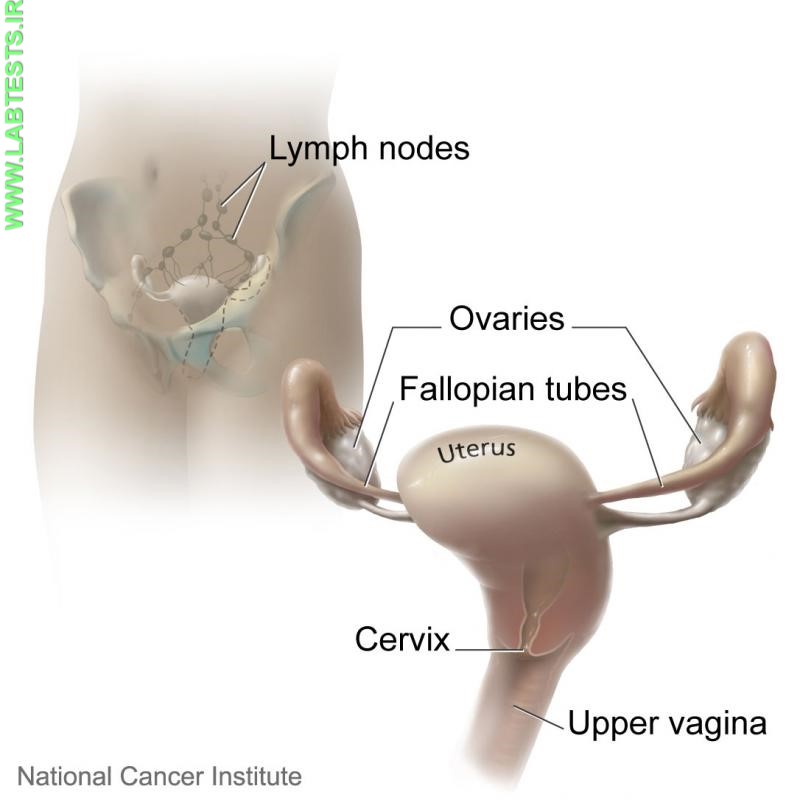
The cervix and nearby organs. Don Bliss, National Cancer Institute

View More
caa6.jpg?itok=NxEBgS4U)
Cervical cells. Image credit: National Cancer Institute

View More
Screening for Cervical Cancer with Pap Test and HPV Test (Co-testing) excerpt from and educational event supported by an educational grant from Roche Diagnostics Corporation.

View More
Complete series of excerpts on HPV and Pap Testing from educaitonal event sponsored by Roche Diagnostics
Related Content
On this site
Tests: HPV Test, Trichomonas Testing
Conditions: Cervical Cancer, Sexually Transmitted Diseases
Screening: Cervical cancer - Young Adults, Adults, Adults 50 and Up
In the News: USPSTF Proposes Screening for Cervical Cancer with Pap Test or HPV Test, not Both (2017), Could Some Women Wait Longer Between Cervical Cancer Screenings? (2017)
Elsewhere on the Web
College of American Pathologists: How to Read Your Pathology Report
Centers for Disease Control and Prevention: Cervical Cancer:
Centers for Disease Control and Prevention: Making Sense of Your Pap & HPV Test Results
National Cancer Institute Fact Sheet: Pap and HPV Testing
National Cancer Institute Fact Sheet: Understanding Cervical Changes, A Health Guide for Women
American Cancer Society: Cervical Cancer


